
Waterjet cutting
in Lodz
Waterjet cutting on a PTV machine: mainly steel, as well as other metals, plastics and stone, e.g. granite. The abrasive waterjet cuts cold, so the material does not heat up in the cut zone. We quote from a drawing or 3D model, from single items to series.
We can also bend and weld the cut parts in the same plant.
| Material | What we cut | From the ECAD archive |
|---|---|---|
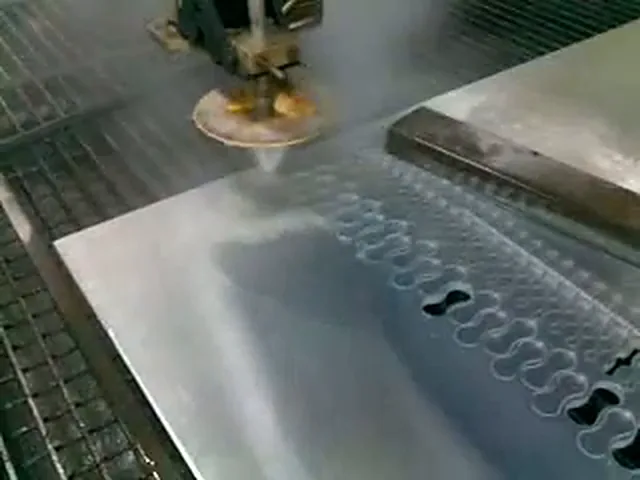 Metals | mainly steel, e.g. structural steel; also aluminium | 25, 20 and 15 mm steel plates; aluminium, 10 mm plate |
| Plastics | grade confirmed in the quote | no example in the archive |
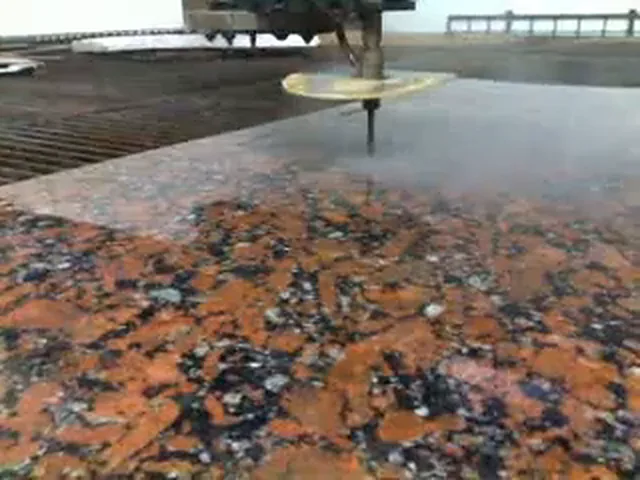 Stone | e.g. granite | granite, 20 mm slab |
Heat at the cut zone: nonecold cutting, no heat-affected zone
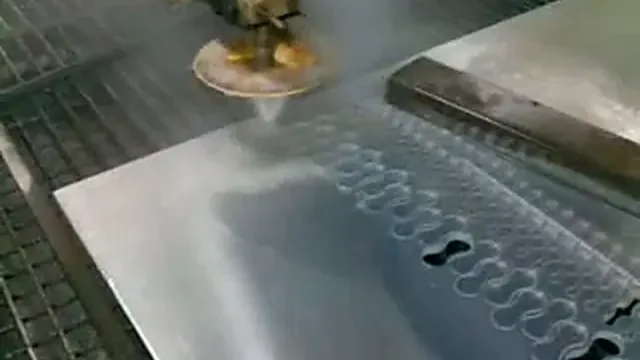
- Waterjet cutting of aluminium, 10 mm plate. Still from ECAD archive footage from 2009.
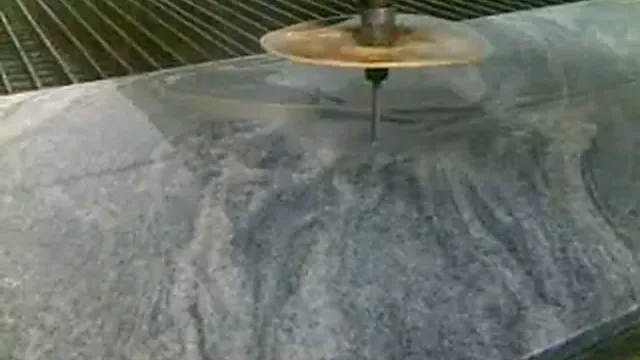
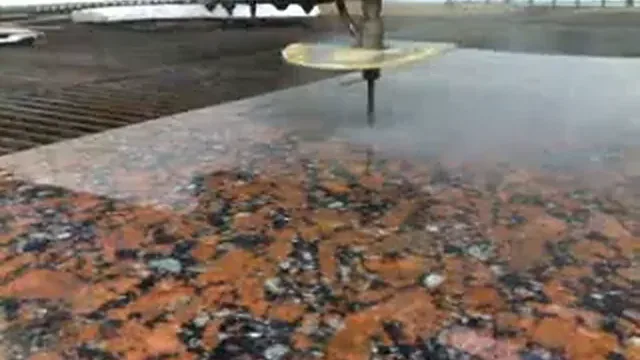
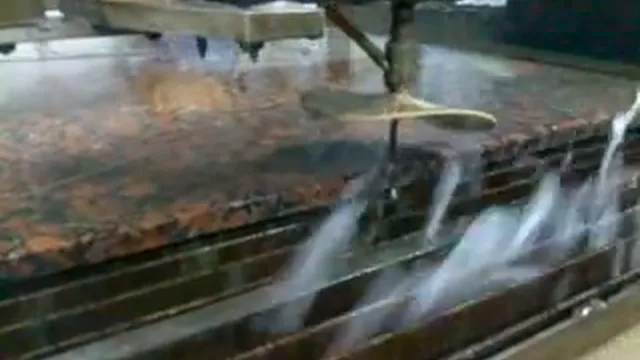
- Waterjet cutting of granite, 20 mm slab. Still from ECAD archive footage from 2009.
Waterjet cutting: mainly steel, also other metals, plastics and stone
Waterjet cutting is a cold process: water mixed with abrasive cuts through the material without heating it at the cut zone, leaving no heat-affected zone. Waterjet technology cuts various materials on a single machine: steel and aluminium, plastics and stone. We therefore choose waterjet where the material must not heat up at the cut edge. We confirm the material grade and thickness for your part in the quote.
| Parameter | Value |
|---|---|
| Type | waterjet cutting machine |
| Brand | PTV |
| Materials | mainly steel; also other metals, plastics, stone |
| Location | ECAD, Lodz, Elektronowa 6 |
All machines: machine park.
Waterjet cutting, laser or plasma: which method to choose
We cut sheet metal and plates in our plant using waterjet, fibre laser or plasma. The methods differ in materials, heat at the cut zone and maximum steel thickness. See also our guide: how to choose a cutting method: laser, waterjet or plasma.
| Method | Our machine | Materials | Heat at the cut zone | Maximum structural steel thickness |
|---|---|---|---|---|
| Waterjet cutting | PTV | mainly steel; also other metals, plastics, stone | none | confirmed in the quote |
| Laser cutting | HSG G3015H V2, 12 kW | steel, stainless steel, aluminium, brass, copper | yes | up to 40 mm (up to 20 mm with a high-quality edge) |
| Plasma cutting | STIGAL, Hypertherm HPR130XD | steel, stainless steel, aluminium | yes | piercing up to 32 mm, cutting up to 38 mm max. |
With waterjet we cut mainly steel, as well as plastics and stone; our fibre laser and plasma are used only for metals. We select the process when preparing the quote. See sheet metal laser cutting and plasma cutting.
Waterjet-cut parts on our drawings
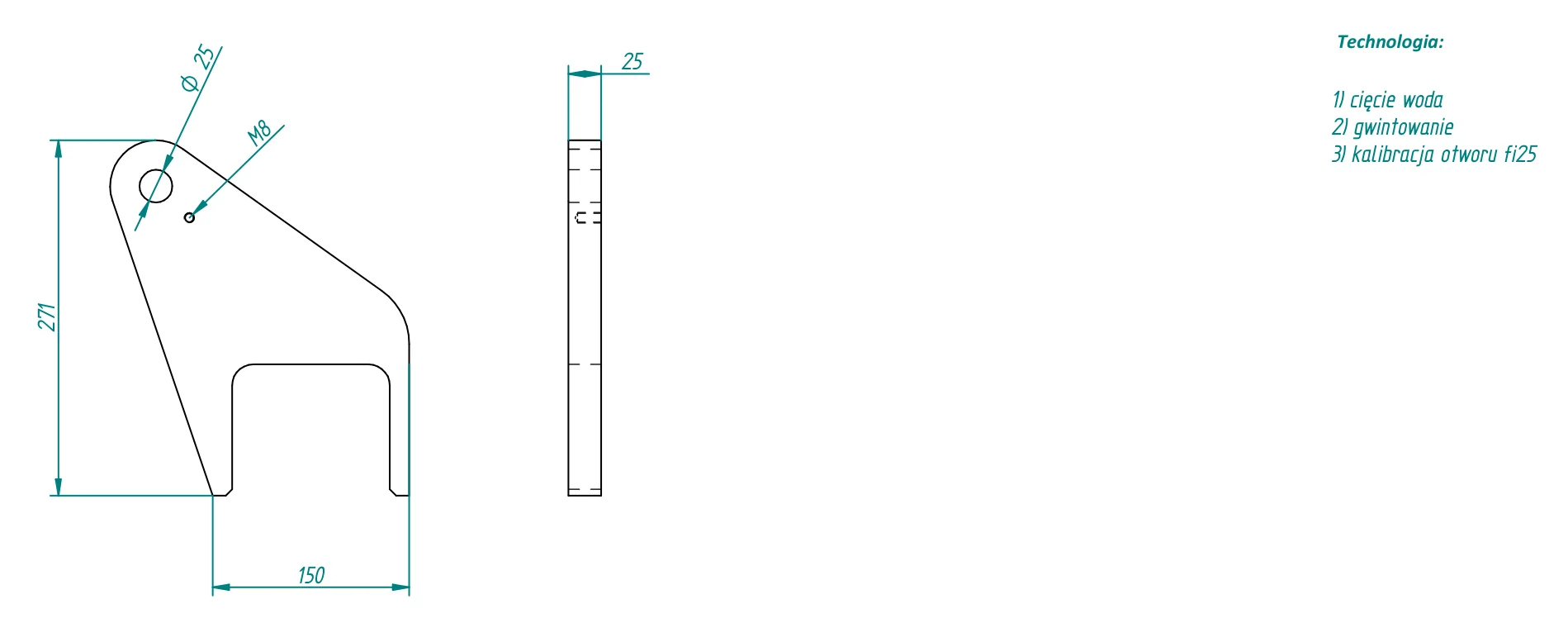
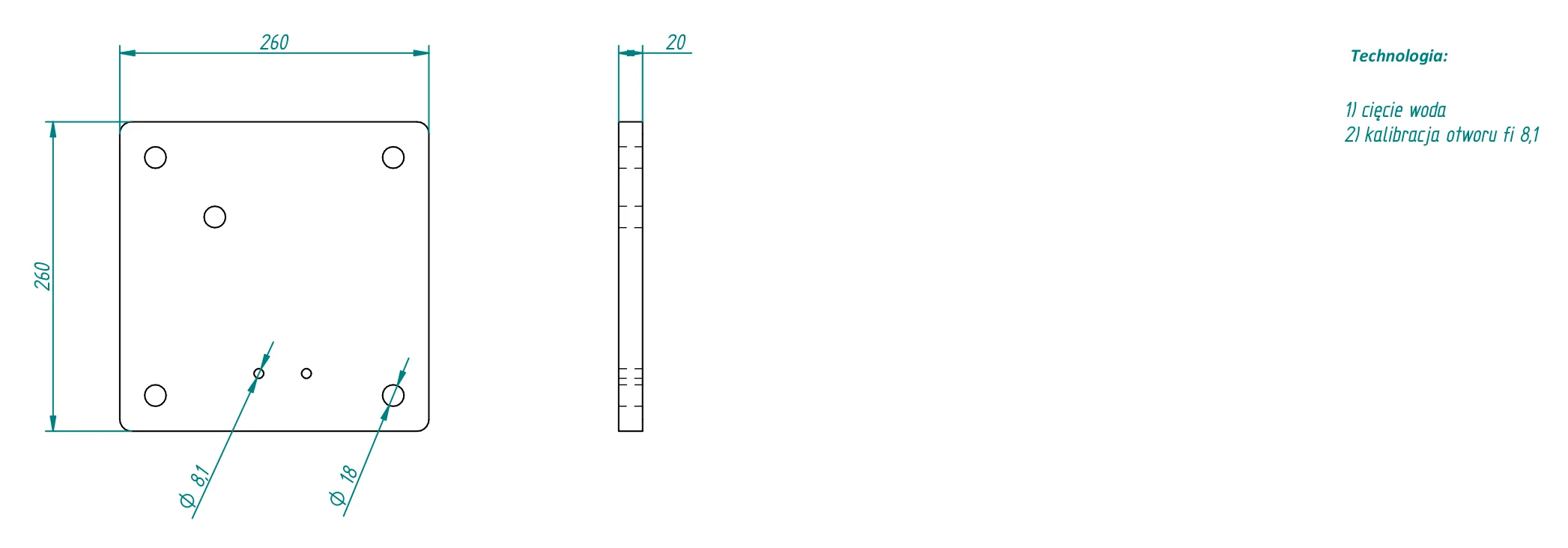
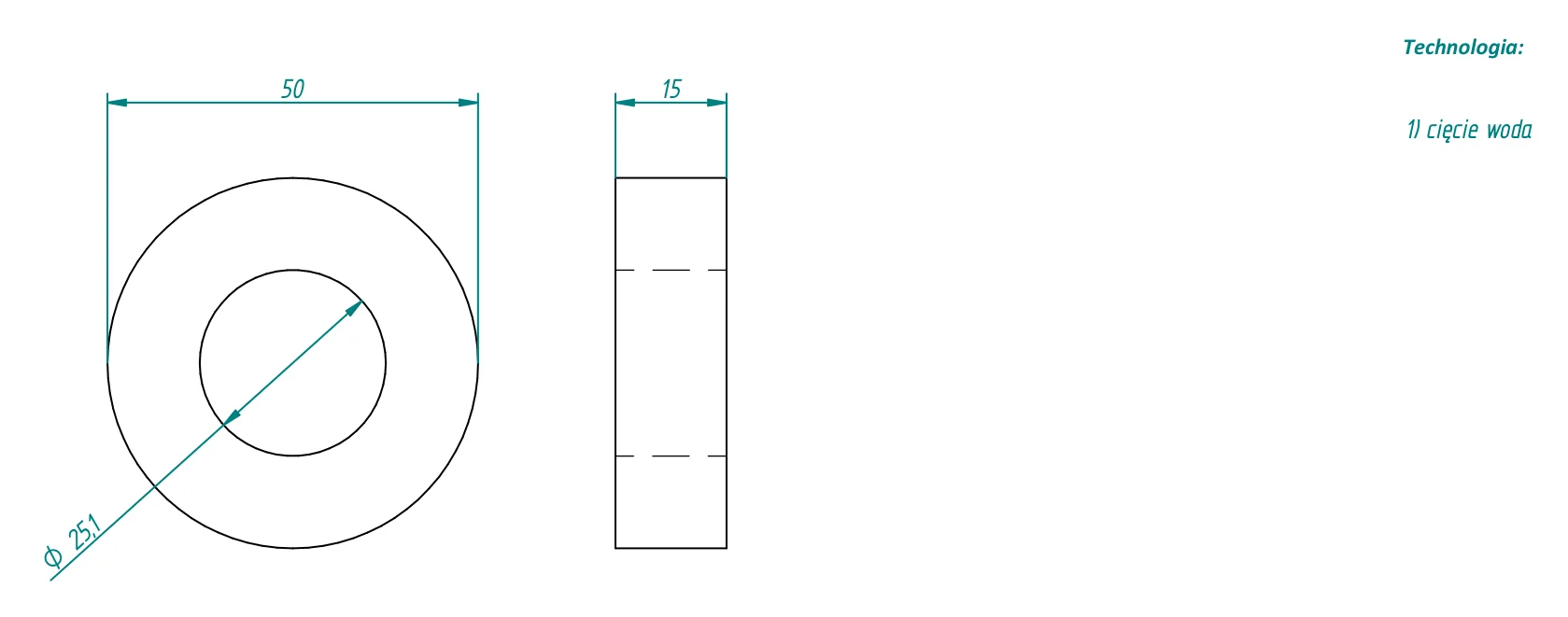
Three drawings from the ECAD archive where the designer specified the process: waterjet cutting. These are 25, 20 and 15 mm steel plates. After cutting, the lug also undergoes tapping and bore sizing, and the flange undergoes bore sizing. We can perform such operations on our CNC machining centres.
You do not need a drawing like this: a DXF file or 3D model is enough. If you have no documentation, our design office can prepare it.
Waterjet cutting in footage from the ECAD archive
2009 footage from the ECAD YouTube channel, in low resolution: aluminium and granite.
The video loads from YouTube only after you click. Clicking the video means you consent to transferring data, including your IP address, to Google (Google Ireland Limited) and to storing player data in your browser storage. Data may be transferred to the USA. Consent applies only to the clicked video. Details in the privacy policy.
- Play video: Waterjet cutting of aluminium, 10 mm plate, 2009 (YouTube, 0:50)
Waterjet cutting of aluminium, 10 mm plate
Tight nesting of rounded parts on a single plate. Archival footage from 2009.
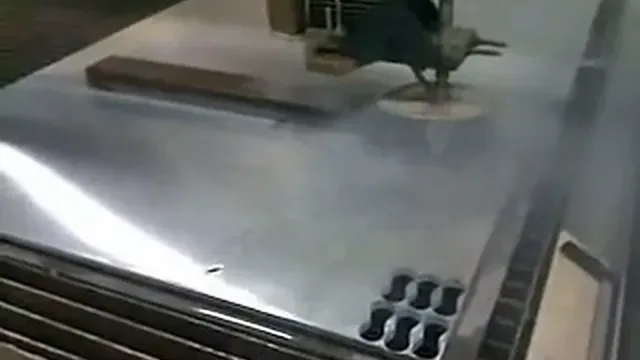
- Play video: Metal waterjet cutting, aluminium, batch of parts, 2009 (YouTube, 1:07)
Metal waterjet cutting: aluminium, batch of parts
A batch of identical parts cut in a row. Archival footage from 2009.
- Play video: Waterjet cutting, granite, 20 mm slab, 2009 (YouTube, 1:06)
Waterjet cutting: granite, 20 mm slab
A slab with a wavy pattern in dense water mist, followed by close-ups of the nozzle. Archival footage from 2009.
- Play video: Waterjet cutting of granite, 20 mm slab, 2009 (YouTube, 0:33)
Waterjet cutting of granite, 20 mm slab
Straight cutting lines forming a contour corner. Archival footage from 2009.
- Play video: Waterjet cutting, 20 mm granite, 2009 (YouTube, 0:23)
Waterjet cutting: 20 mm granite
The cutting head moves over a stone slab on the table slats. Archival footage from 2009.
All videos from the shop floor
Newer footage and new machines are shown on the From the shop floor page. Company channel: ECAD sp.k. on YouTube.
Waterjet cutting Lodz: plant at ul. Elektronowa 6
The PTV waterjet cutter operates at our plant at ul. Elektronowa 6 in Lodz. You can bring your part in during working hours without an appointment. We have been operating since 2008 and employ 25 people.
See contact and directions and machine park.
| Details | Information |
|---|---|
| Address | ul. Elektronowa 6, 94-103 Lodz |
| Working hours | Mon–Fri 8:00–16:00 |
| Saturday and Sunday | closed |
| Access | on-site parking and entry |
How to order waterjet cutting
We quote waterjet cutting based on a drawing or 3D model; we have no price list per metre of cut. More: what determines the price of cutting and bending.
The price depends on:
- material and grade
- thickness
- cutting length and number of pierces (holes)
- quantity
- further processing: bending, welding, tapping
- lead time
Send a drawing or 3D model
PDF, DXF, DWG, STEP, IGES, photos (JPG, PNG, TIFF) or a ZIP or 7Z archive. Up to 10 files, up to 100 MB in total. A DXF file with the contour is the most convenient for cutting.
Describe your order
Material and grade, thickness, quantity, lead time, and whether the parts require bending or welding.
We will reply with any questions and a price
We will send a quote or ask for any missing details.
We process enquiry data in accordance with our privacy policy.
Questions about waterjet cutting
How does waterjet cutting work?
A waterjet cutter directs a thin stream of water under very high pressure, mixed with an abrasive, onto the material. This is a cold cutting process: the material does not heat up at the cut edge, so there is no heat-affected zone. We cut contours from a file, so we need a drawing or model to prepare a quote.
What materials do you cut with waterjet?
On our PTV waterjet cutter we mainly cut steel, such as structural steel; we also cut other metals (including aluminium), plastics and stone. We confirm the material grade and thickness for your part in the quote.
Do you waterjet cut stone, such as granite?
Yes. We cut stone, such as granite, on our waterjet cutter from a drawing or DXF file. We confirm the stone grade, slab dimensions and thickness in the quote. The ECAD archive includes footage from 2009 showing waterjet cutting of a 20 mm granite slab.
Waterjet or laser cutting: which to choose?
With our HSG G3015H V2 (12 kW) fibre laser we cut sheet metal: steel, stainless steel, aluminium, brass and copper. With waterjet we mainly cut steel, as well as plastics and stone; waterjet is particularly useful where the material must not heat up along the cut. We help select the right process when quoting: see sheet metal laser cutting and plasma cutting.
How much does waterjet cutting cost?
We do not have a fixed price list per metre of cut. We quote each part individually based on a drawing or model; the price depends on the material, thickness, cutting length, number of pierces (holes), quantity, secondary operations and lead time. See cutting and bending price list: what determines the price.
Do you cut one-off parts?
Yes. We waterjet cut from single items to batch runs, based on a drawing or 3D model.
Can you bend, weld and machine parts after waterjet cutting?
Yes. We can bend cut parts on our Trumpf TruBend 7050 press brake, weld them in our welding shop (including stainless steel and aluminium) and machine them on CNC machines, for example tapping and reaming holes. The scope depends on the material and thickness; we verify this when quoting. See sheet metal bending, stainless steel and aluminium welding and CNC machining.
Have a drawing?
Send your file and let us know what you need: material, thickness and quantity. We will reply with any questions and a price.


