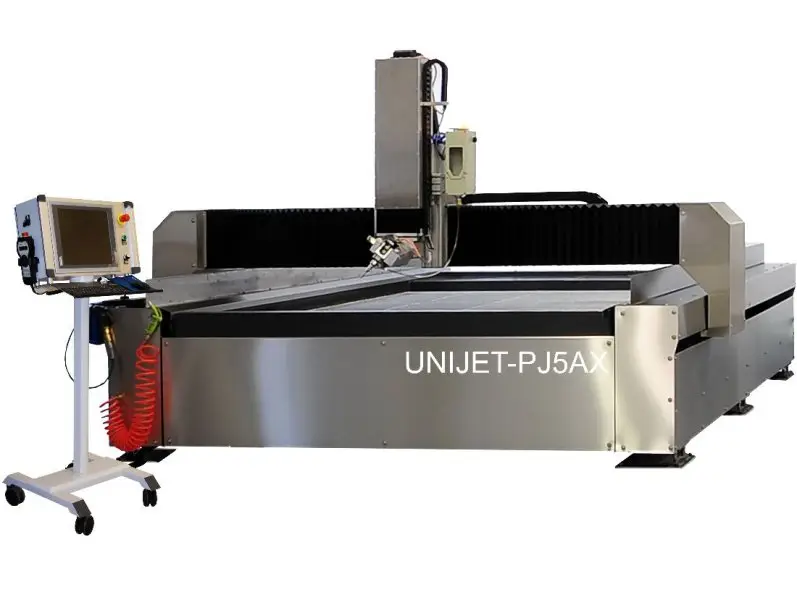
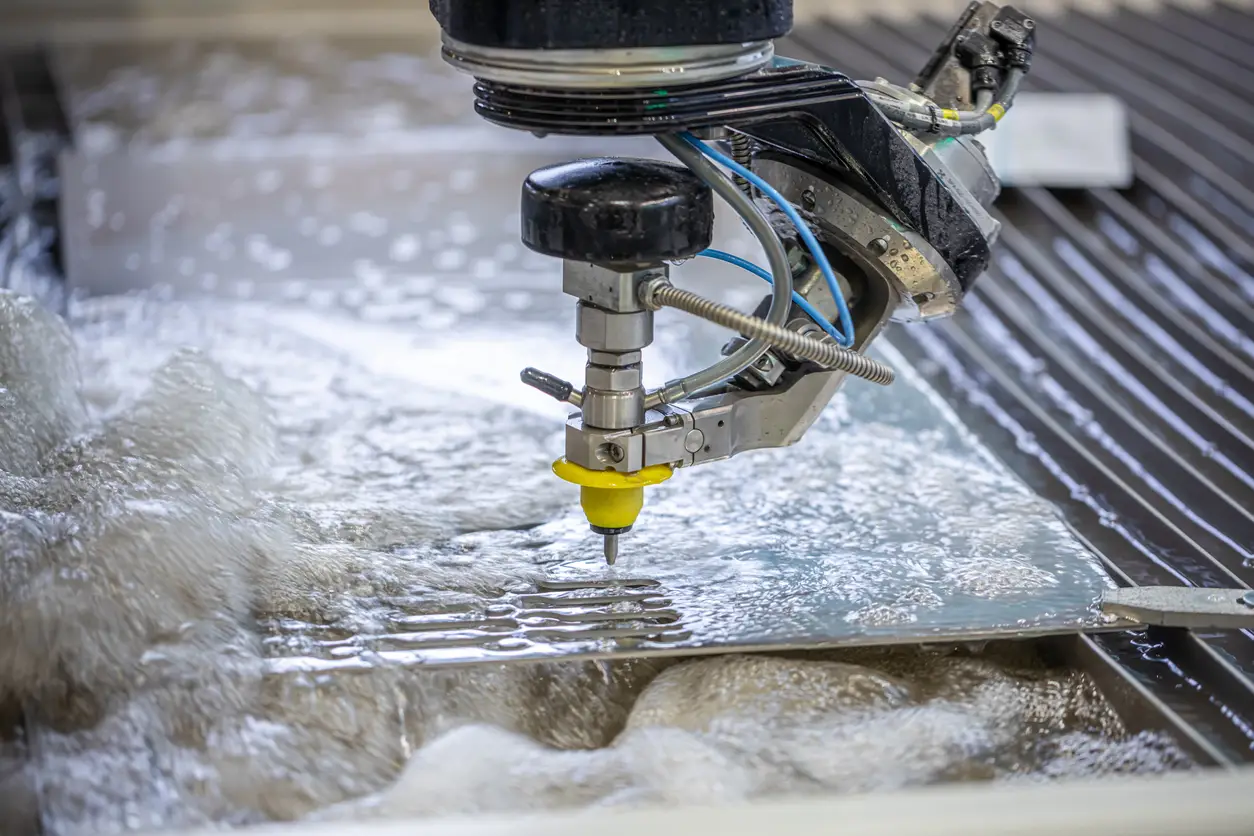
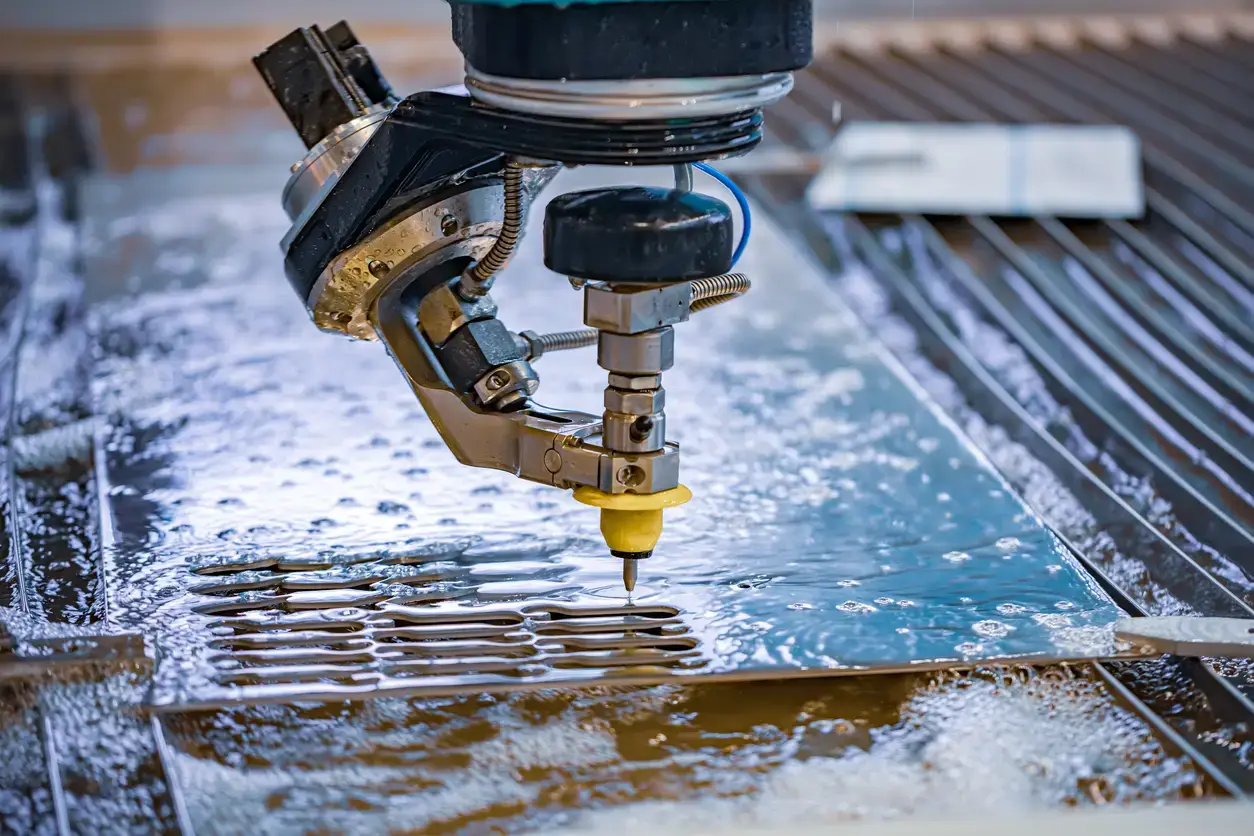
How Does Water Stream Cutting Work?
Water stream cutting involves using water at very high pressure, which cuts the material with the help of added abrasive, such as garnet granules. Thanks to this technology, it is possible to precisely cut materials such as:
Stainless steel,
Aluminum,
Titanium,
Plastics,
Ceramics and glass.
Moreover, this technology allows for cutting materials sensitive to high temperature, which may deform with other processing methods.
Advantages of Waterjet
Waterjet cutting offers many benefits that make it indispensable in modern industry:
Precision – Achieves accuracy up to 0.1 mm, allowing for the realization of even the most complex projects.
No Thermal Influence – The process does not cause structural or thermal changes in the material.
Versatility – Enables processing of both metals and non-metallic materials.
Eco-friendliness – Minimizes waste, and the used abrasive can be recycled.
Thanks to these advantages, water stream cutting is effective in industries requiring the highest precision and quality.
Application of Waterjet Cutting in Łódź and the Łódź Region
In Łódź and the Łódź region, water stream cutting is used in many industrial sectors because it combines precision with versatility:
Aerospace Industry – Precise processing of titanium and aluminum used in aircraft construction.
Automotive – Cutting body parts and additional technical components, allowing for perfect fitting.
Construction – Processing natural stone and glass for architectural projects, enabling the achievement of details meeting high aesthetic requirements.
Moreover, according to a Grand View Research report, the waterjet cutting market is expected to grow by 6% annually, which clearly confirms the dynamic development of this technology both in Poland and worldwide.
Case Study: Waterjet Cutting for the Aerospace Industry
For one of our clients in the aerospace industry in the Łódź region, we completed a project involving precise cutting of titanium components for aircraft construction. By using waterjet cutting, we achieved:
Perfect fitting of components with complex geometry, which shortened assembly time,
No thermal influence on the material structure, ensuring full mechanical strength,
Waste reduction by 20%, which in turn lowered production costs and reduced environmental impact.
Moreover, the client appreciated our timeliness and precision, resulting in continued collaboration on further projects related to aircraft construction.
Comparison with Other Processing Methods
Comparison Table of Waterjet Cutting Efficiency with Other Methods
Technology | Precision | Technical Influence | Operating Cost | Material Versatility |
|---|
Waterjet Cutting | High | None | Medium | High |
Laser Cutting | High | High | High | Limited |
Plasma Cutting | High | High | Medium | Limited |
Thanks to its versatility, waterjet cutting is an excellent choice for demanding industries.
Why Choose Waterjet Cutting?
If you are looking for a method that ensures precision, material safety, and cost minimization, waterjet cutting is the ideal solution. Moreover, in Łódź and the Łódź region, this technology is available for companies looking to improve the quality of their production while reducing costs.
Summary
Water stream cutting is an eco-friendly and versatile processing method that meets the expectations of the most demanding industries, such as aerospace and automotive.